|
Decreto di accreditamento n° 9249 del 04.08.2008 - Regione Emilia-Romagna |
|
| Sede di erogazione del servizio: Via 56 Martiri, 79 48124 - Ponte Nuovo - RAVENNA tel.(+39) 0544.603511 - fax. (+39) 0544.603513 segreteria@villaggiofanciullo.org www.villaggiofanciullo.org |
Rette Regionali Giornaliere: Terapeutica Riabilitativa € 82,71 Pedagogica Riabilitativa € 64,33 Gruppo Appartamento € 58,37 |
Premise
The therapeutic rehabilitative treatment of pathological addictions has become more and more focused, first with the elaboration of a specific treatment of Alcohol addiction, then with particular attention to Behavioral Addictions . The frequent confirmation of psychoactive substance dependence associated with Pathological Gambling, requires an increasingly specific and increasingly personalized treatment. The established objective is achieved through an adequate training of the operative team and through a correct multidisciplinary approach, able to allow the appropriateness of the interventions putting the patient at the center of the treatment and rehabilitation process foreseen by the therapeutic community . Monthly supervision of the team with presentation of clinical cases and evaluation of the treatment and outcomes is scheduled. The dimensions and the structural characteristics of the seat allow an adequate division of the areas compared to the reception of patients with different problems.
Utility
Patients with problems related to drug addiction, alcohol dependency, polydependence, psychiatric comorbidity, and compulsive gambling. Patients with pathological dependence who take advantage of alternative measures to imprisonment. The structure or therapeutic communities hosts adult male users. There are 50 seats available altogether.
Structure manager
Dr. Manuela Ceccarelli - Surgeon Doctor
School of Psychoanalytic Psychotherapy at the International Institute of Analytical Social Psychology, Mestre (VE). Biennial Master in "Group and Family Psychotherapy" at IIPSA Mestre (VE). First level University Master in "Alcohol-related Problems and Diseases", Careggi Hospital, Florence.
Psychiatrist
Dr. William Esposito
10 hours per week availability 24 H
Clinical Psychologist
Dr. Paola Ballardini
Psychologist and Psychotherapist
Dr. Esther Paduano
nr. 2 Nursing Prof.
nr. 7 Educators Prof.
nr. 4 Operators
nr. 3 Supervisory work experience technicians
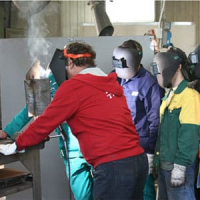
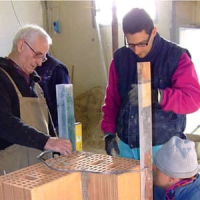
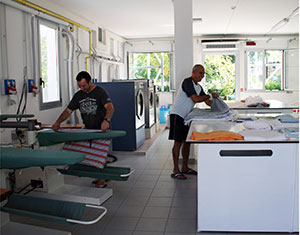 Work activities, mainly in the field of horticulture and management and maintenance of green areas, construction and light carpentry favor the development of autonomy, a sense of responsibility and capacity for both production and management. Even in the most disadvantaged conditions it represents an important resource for conserving and enhancing residual abilities, as well as being a useful tool to promote socialization. An important function is carried out by expert craftsmen able to transmit skills and professional experience. Craft activities are privileged to facilitate the creation of employment opportunities in view of social reintegration through the relationship with training institutions present in the area.
 Modes and related projects, agreed with the sending service, will vary according to the user's characteristics, objectives achieved and objective needs, and based on the presence or absence of a family and social network. The patient will continue the path of care in the local services and it would be desirable to attend self-help groups.
Premise
The therapeutic rehabilitative treatment of pathological addictions has become more and more focused, first with the elaboration of a specific treatment of Alcohol addiction, then with particular attention to Behavioral Addictions . The frequent confirmation of psychoactive substance dependence associated with Pathological Gambling, requires an increasingly specific and increasingly personalized treatment. The established objective is achieved through an adequate training of the operative team and through a correct multidisciplinary approach, able to allow the appropriateness of the interventions putting the patient at the center of the treatment and rehabilitation process foreseen by the therapeutic community . Monthly supervision of the team with presentation of clinical cases and evaluation of the treatment and outcomes is scheduled. The dimensions and the structural characteristics of the seat allow an adequate division of the areas compared to the reception of patients with different problems.
Utility
Patients with problems related to drug addiction, alcohol dependency, polydependence, psychiatric comorbidity, and compulsive gambling. Patients with pathological dependence who take advantage of alternative measures to imprisonment. The structure or therapeutic communities hosts adult male users. There are 50 seats available altogether.
(40 seats Daily Ticket € 70.11)
The program is aimed at 10 male users, adults, in which alcohol addiction has not led to a neurological, psychiatric or internist compromise, such as to prevent adequate participation in the activities that the program provides. The duration of the program is three months with possible extension of another three months.
Insert
The insertion will take place at the request of the Ser.T Company U.S.L. of competence, which will have to provide a psychosocial relationship and a clinical-internist relationship. After the suitability assessment, a first interview with the interested user is foreseen, if possible, accompanied, if available, by the family members. In the cases indicated, it would be necessary to precede the insertion from a hospitalization in the hospital ward for the implementation of detoxifying and detoxifying measures, also allowing the appropriate diagnostic investigations.
Method
- To regulate the health status and the evaluation of the clinical conditions through the advice of the doctor, alcologist and psychiatrist
- Continuation of cessation treatment
- Specific and personological psychodiagnostic tests
- Motivational Counseling
- Psychoeducational groups
- Psychotherapeutic treatment through individual interviews and structured groups
- Cognitive rehabilitation programs for the treatment of memory impairments:
memory training and mnemonics - Physical rehabilitation programs
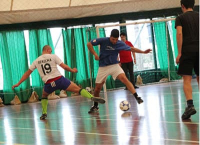
- Recreational and cultural activities
- Training Courses
- Talks with family members
Targets
- Reinforcement of motivation
- Improve interpersonal relationships by increasing tolerance to frustrations by reducing conflictuality by avoiding the activation of the regression mechanism
- Acquisition of new forms of behavior
- Improve residual abilities
- Promote family awareness of the current deficit. Encourage the processing of problems related to separation-emancipation
- Promote social reintegration
Reintegration
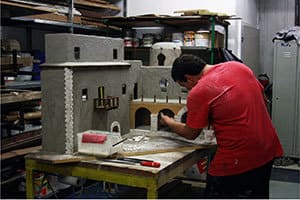 Is favored by activity social mediation aimed at facilitating participation in traineeships or training courses that support job placement. In the event that the user already has an occupation, he will have a period of leave at the end of which he will resume work. If there is a family and social network, you can return to your home. In the event of particularly precarious and disadvantaged situations, in agreement with the sending service, a project can be developed that includes the transition to a supported family or apartment. Also in this case it will be essential for the patient to continue the care of the Territorial Services and frequent with the family, if possible, self-help groups.
The transition from the therapeutic-rehabilitative program to the pedagogical-rehabilitative program is foreseen, which foresees an intervention with medium / low intensity, in order to favor the consolidation of the objectives achieved and the social-work reintegration.